If you’ve ever looked at your royalty statements after a new well comes online, you might have noticed something surprising: those first few checks are often the biggest ones you’ll ever receive from that well. After a few months, the amounts begin to fall—sometimes sharply.
That’s not an accounting error or a problem with the well. It’s a normal, physical process that every oil and gas well experiences.
A Real Example: Bakken Wells from 2021
The chart below shows average monthly production from ~700 Bakken wells that began producing in 2021, in terms of barrels of oil equivalent (BOE).
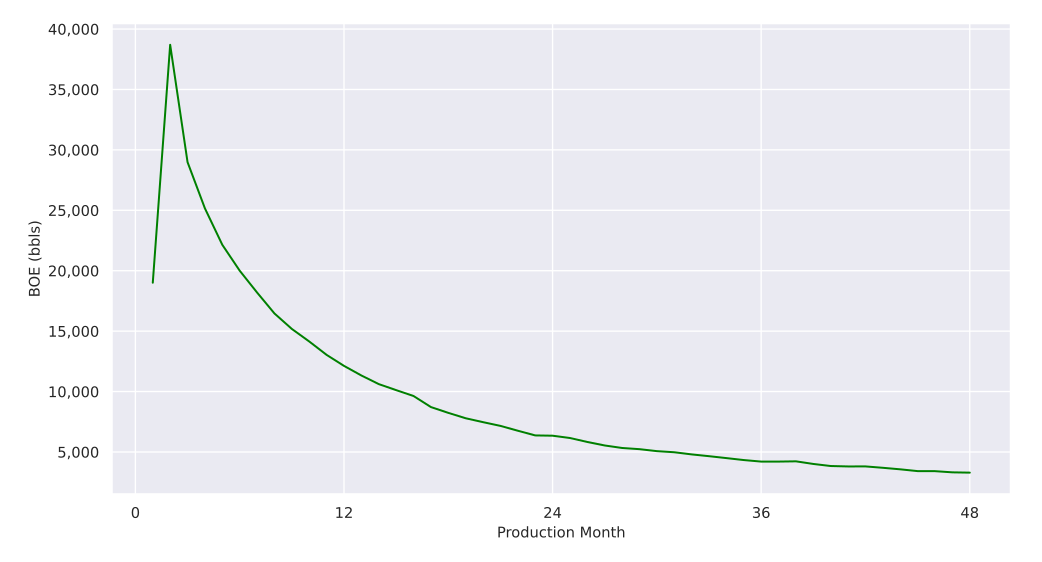
At first, production shoots up. By the first two or three months, output is at its highest—the “flush” phase. But soon after, production begins to fall quickly. By month six, it’s often half of what it was at the start. After the first year, production starts to level out, declining more slowly over time.
This steep early drop is completely normal and expected. Here’s why.
Think of It Like a Shaken Soda Can
Imagine a can of carbonated soda that’s been shaken. When you first open it, the pressure inside is so high that the liquid rushes out on its own—it even defies gravity for a moment.
But that burst doesn’t last long. Once the gas escapes and pressure equalizes, the soda stops flowing freely. If you want more, you’ll need to tip the can—or even use a straw to get the rest out.
That’s exactly what happens inside an oil or gas well.
Early in a well’s life, the reservoir pressure is high, and oil or gas flows to the surface almost effortlessly. As production continues, the pressure drops and the natural energy that pushes fluids upward begins to fade. The flow slows down until mechanical help (like artificial lift) is needed to keep production going.
Or Like a Wet Sponge
Another way to picture it: think about squeezing a wet sponge.
- The first squeeze brings out a gush of water.
- The second squeeze still gets plenty, but not as much.
- By the third or fourth squeeze, you’re working harder for smaller and smaller amounts.
Reservoir rock behaves the same way. When it’s “saturated” with hydrocarbons, the first bit comes out easily. But after those initial months, it takes more and more effort to move the remaining fluids through the rock’s tiny pores.
Why the First Few Months Matter So Much
Engineers often describe this behavior with decline curves, which track production over time. In shale formations like the Bakken, this early phase is called transient flow, and it’s characterized by:
| Phase | Typical Duration | Description |
|---|---|---|
| Initial Production | 0–3 months | Highest production rates; pressure-driven flow from fractures and nearby rock |
| Early Decline | 3–12 months | Rapid drop in output as pressure equalizes |
| Steady Decline | 1–5 years | Production stabilizes at a lower, predictable rate |
Most of the well’s total lifetime production happens during those first few months—the “flush” period. That’s why early royalty checks are often so large compared to what comes later.
What Happens Afterward
Once the steep decline phase ends, production enters a more gradual decline. The well still produces—sometimes for years or even decades—but at a much lower rate.
By that stage, operators typically add pumps or artificial lift systems to help bring remaining oil to the surface, similar to using a straw once the soda’s fizz is gone.
The Bottom Line
That steep early decline in your production chart isn’t a sign of trouble—it’s the natural result of how fluids move underground.
Just like a shaken soda can that bursts open or a sponge that gives up water easily when it’s full, a new well releases its energy and fluids quickly at first. Over time, production slows as the reservoir “calms down.”
Understanding that pattern can help landowners interpret royalty changes and appreciate the natural rhythm of a well’s life: a fast start, followed by a long, steady tail.